
Relational Infrastructures: Culture, Community, and Decolonial Futures
Building resilient, inclusive, and decolonial urban communities through a culture in commons

“Liberated relationships are one of the ways we actually create abundant justice, the understanding that there is enough attention, care, resource, and connection for all of us to access belonging, to be in our dignity, and to be safe in community”
Adrienne Maree Brown
I’m at HAUS KCH in Kuching, Sarawak, Malaysian Borneo. The monsoon rains drum a soothing backround rhythm to my thoughts as I write in the shared office space. Art prints, paintings, and analogue photographs cover the walls; shelves are crammed with books about cats and woodcut techniques to British literary classics. Nearby, members of the HAUS KCH team chat with Kee Huang, owner of the Hoan Gallery here in Kuching. The Hoan Gallery is actively decolonising art in Kuching - sharing histories and stories of Sarawakian artists who first pioneered fine art in the region, educating new artists in that history, and keeping local indigenous art techniques like batik alive.
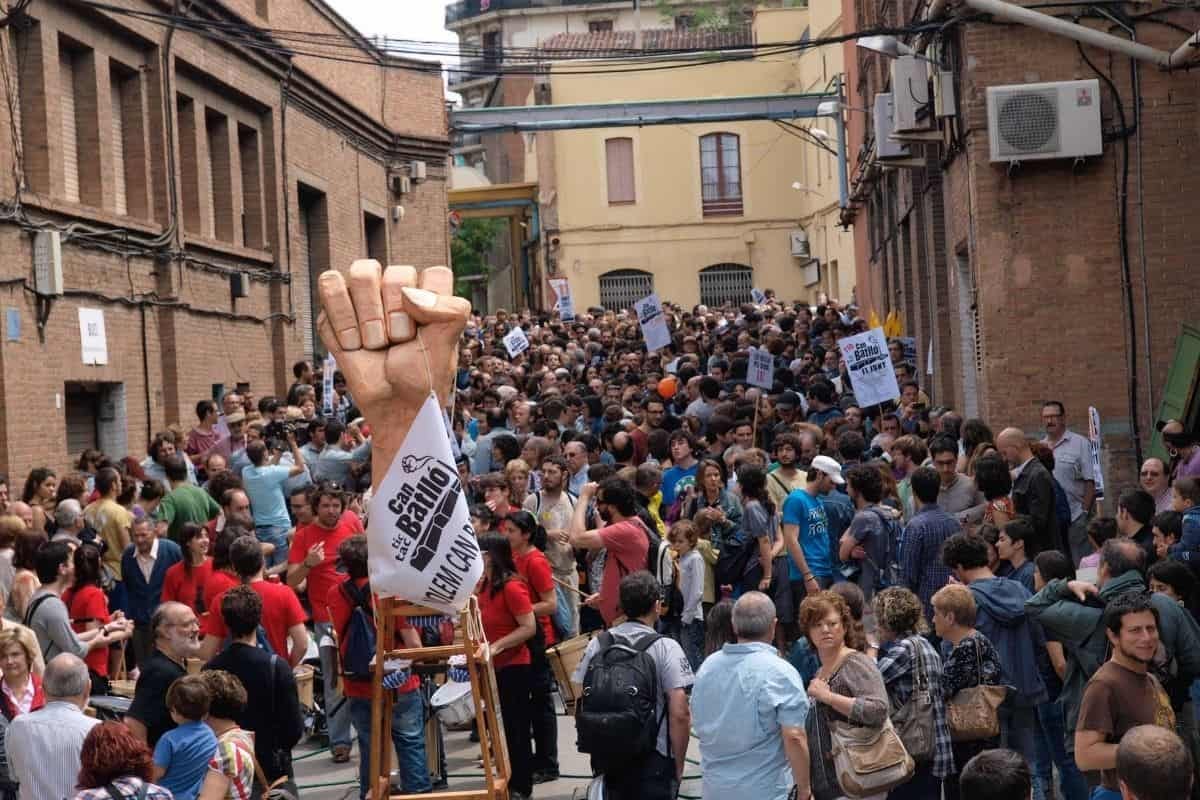
Last week I was in Barcelona, the first leg of my Churchill Fellowship exploring creative organising practices for global majority communities in the UK. Since leaving, I’ve been reflecting on what makes their anarchist and collective organising history and present practices so magnetic. Part of it was the warmth with which I was welcomed to Can Batlló by Joan, one of the volunteers. Despite my non-existent Spanish, Joan welcomed me with four hours of enthusiastic tours and history of the site as if I belonged there the whole time.
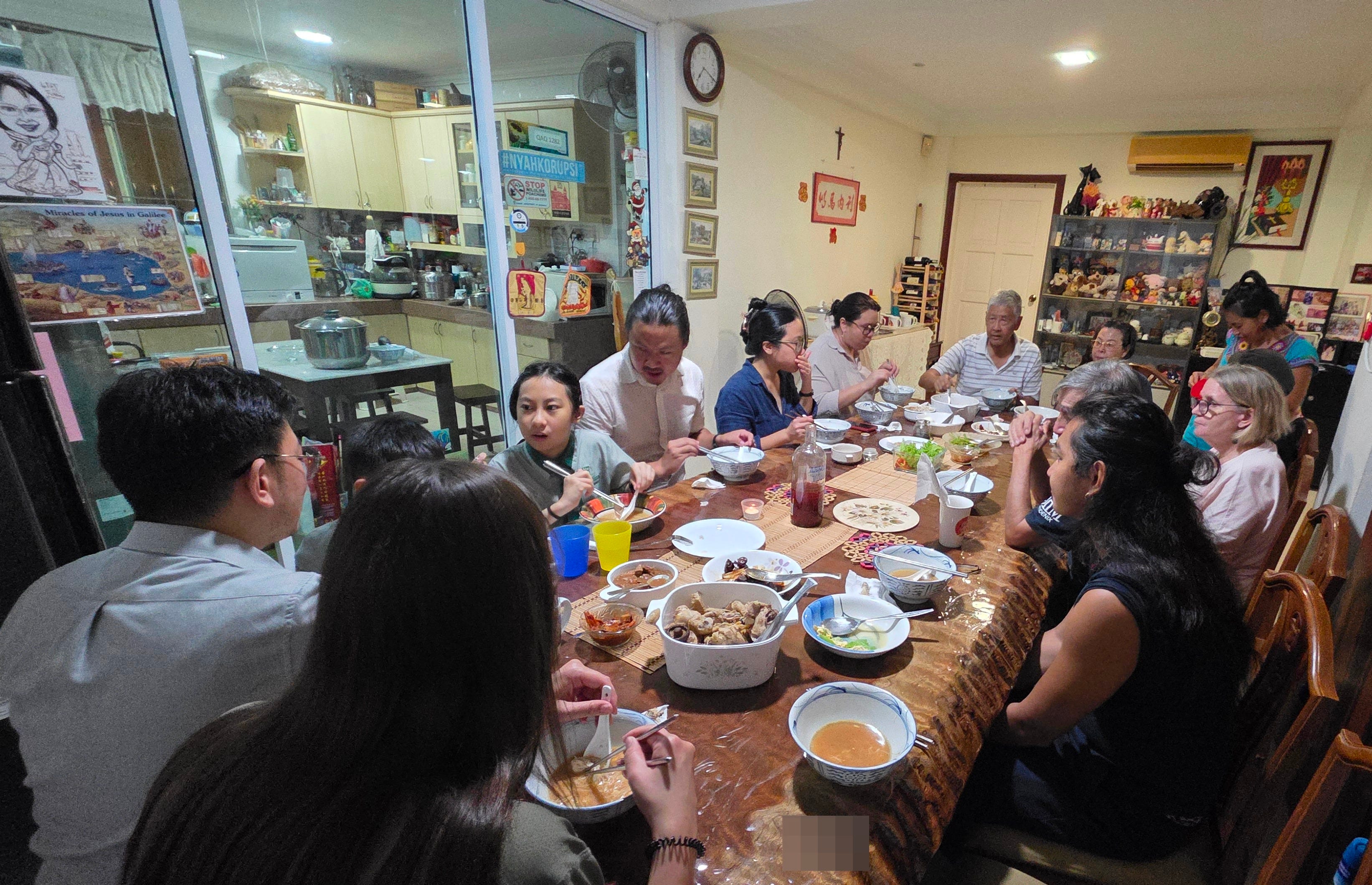
Even on my first night in Kuching, a Malaysian-Chinese family dinner drew me into talks on governance and self-determination with a Bornean indigenous artist, a Yukon First Nations Council member, and a Singaporean family friend. Over yi-mein long-life noodles, their warmth made me feel instantly at home - a reminder of the relational generosity that makes cultural practice feel alive and possible.
While experiences like these show how cultural practice can be relational, generous, and rooted in care, the picture in the UK often feels very different. Across cities like Bristol, Birmingham and London, global majority communities face rising anti-migrant sentiment, the erosion of third spaces, and a cultural and arts scene struggling under funding cuts and pressures on local councils. Council land is frequently sold to private developers, public spaces are monetised, and the social infrastructure that once allowed neighbourhoods to organise, gather and imagine collectively has been weakened.
In the UK today, migration is increasingly framed as a cultural threat. Headlines and far-right rhetoric warn of lost traditions, eroded values and communities that no longer recognise themselves. This language has become especially potent in moments of economic instability, housing scarcity and political distrust. Yet the idea that there is a singular, stable ‘British culture’ being steadily undone by migrants and asylum seekers is difficult to locate in everyday life. British identity can feel thin, fragmented and shaped more by class, region and migration than by any shared cultural infrastructure. Yet, recent social attitude surveys suggest that cultural achievement remains one of the few domains where national pride remains relatively strong, even as trust in political institutions and shared historical narratives continues to decline.
But this pride raises important questions. Whose culture are we celebrating when we talk about British cultural achievement? Who gets to make culture, to access space, to be funded, to be visible, to shape what is considered valuable or legitimate? And who is excluded from those processes? For many people, especially those living outside major cultural centres or working within precarious creative economies, the celebrated image of British culture feels distant from lived experience.
What has quietly disappeared is something far more tangible: the shared infrastructure that allows culture to be lived, transmitted and transformed at the neighbourhood level - aka, ‘cultural municipalism' - Zoe Rasbash has written about how creative municipalism is interconnected with social justice, degrowth and well-being economies in our cities.
When civic spaces and cultural infrastructure are hollowed out, when community halls and affordable studios disappear, and funding for local arts programmes is squeezed, the cultural achievements we celebrate don’t always translate into lived cultural life - the places where neighbours meet, artists work, and shared stories are made. Local councils, stripped of resources and political autonomy, have sold land and buildings to private developers in cities like Bristol, Birmingham, Liverpool and beyond. At the same time, the arts sector has become increasingly precarious, centralised and disconnected from everyday neighbourhoods, shaped by funding cuts, short-termism and rising property costs.
These structural shifts intersect with the cost of living crisis, the housing emergency, the erosion of green space, and a growing loneliness epidemic. For global majority communities, they also intersect with heightened exposure to racialised violence, surveillance, insecure work and political scapegoating. As shared civic space disappears, opportunities for relationship-building across difference shrink. Communities become more isolated, more fearful, and more vulnerable to narratives that frame social change as a threat rather than a possibility.
If culture is being lost, it is not because of migration. It is because the material conditions that allow culture to be practised collectively are being dismantled. Culture does not survive in abstraction; it lives in kitchens, workshops, rehearsal rooms, community gardens, social centres and streets. Without accessible third spaces, culture becomes commodified, individualised and detached from the social fabric of our lives.
What feels urgent is the need to reconnect space, culture, and power at the neighbourhood level, an enquiry deeply connected with my work at WeCanMake in Bristol - and for us to rebuild the shared infrastructures that allow new collective identities to emerge: identities rooted in care, ecological responsibility, mutual aid and democratic participation. Through encounters with Barcelona’s culture of radical municipalism and urban commons, I’ve been thinking - what does a similar model of creative municipalism look like for global majority creative communities in the UK, one rooted in collective ownership of land and buildings, resilient local cultural ecosystems, and an expanded sense of whose voices, knowledges and practices shape the future of the city?
“What do we need to remember that will push back against the forgetting encouraged by consumer culture and linear time? What can we remember that will surround us in oceans of history and potential? And how?”
- Alexis Pauline Gumbs, Undrowned: Black Feminist Lessons from Marine Mammals
Neighbourhood Organising, Creative Practice and Collective Power
If the erosion of shared space has weakened our capacity to relate, organise and imagine together, then rebuilding neighbourhood-scale infrastructure becomes an act of cultural and political repair. Neighbourhoods are where everyday life happens: where children grow up, elders age, friendships form, local economies emerge and grow, and care circulates. They are also where people most directly encounter housing insecurity, rising food costs, environmental risk and social isolation. Organising at this scale allows political questions to remain grounded in lived experience, while still building toward collective agency across a city.
Creative practice plays a vital role here as a way of making shared conditions visible and negotiable. Film, storytelling, design, performance, mapping and collective making can translate complex structural issues into forms that invite participation and emotional connection. They create space for people to speak from lived knowledge, to surface histories that are often marginalised, and to imagine alternatives together. In neighbourhood contexts, creative processes often become organising tools: helping residents articulate what matters to them, build trust across difference, and develop shared visions for housing, public space, care and ecological transition.
Third spaces are crucial to this work. When communities have access to rooms, workshops, gardens, kitchens and social centres that are not driven by commercial logics, relationships can deepen over time. These spaces become sites of informal learning, intergenerational exchange and political incubation. Without them, organising becomes fragmented and fragile, reliant on short-term funding or borrowed venues, and disconnected from communities’ everyday rhythms. The loss of decommodified space limits not only cultural production, but collective agency itself.
Across the UK, there are already people quietly building alternatives within these constraints. At WeCanMake in Bristol, neighbourhood-based design and co-production have been used to support residents to collectively imagine and prototype new forms of housing, retrofit and shared infrastructure, rooted in local knowledge and long-term stewardship rather than speculative development. In Birmingham, Hood Ventures (formerly MAIA), led by Amahra Spence, have been cultivating cultural ecosystems that centre Black and global majority artists, creating studios, programmes and shared platforms that redistribute access to space, resources and visibility, while grounding creative work in place and community. In London, Resolve Collective have been developing models of community-led spatial practice, mutual learning and collective governance that challenge extractive development models and open up alternative ways of shaping the built environment.
These initiatives differ in scale and form, but they share a commitment to relational work: building trust, redistributing power, and treating space as a commons rather than a commodity. They show how creative practice can function as civic infrastructure to sustain relationships, enabling participation, and supporting communities to organise around housing, safety, employment and environmental conditions. Importantly, many of these practices are led by or deeply embedded within global majority communities, drawing on cultural knowledge systems that emphasise collective care, reciprocity and long-term responsibility.
These initiatives are intentionally rooted in place. Their power comes from deep relationships with specific neighbourhoods, histories and material conditions, rather than from scale in the abstract. What makes them vulnerable is not their locality, but the policy and funding environments they operate within: short-term funding cycles, and governance structures that still prioritise private ownership and rapid development over slow, relational work.
Importantly, these projects do not exist in isolation. They already function as part of a growing ecosystem, pushing on different levers of systems-change across culture, housing, land, care and infrastructure while supporting one another through shared practices, knowledge exchange and mutual solidarity. The challenge, then, is not how to “scale up” in ways that dilute their place-based character, but how to protect, connect and sustain these ecosystems so they can accumulate collective power over time without losing their rootedness.
Working at the city scale offers one pathway. When neighbourhood initiatives connect into wider municipal ecosystems, they can begin to influence land policy, funding priorities, governance models and long-term urban strategy. Cultural ecosystems can become platforms for organising, experimentation and political education, helping to cultivate a new ‘eco-social city culture’ that is grounded in care, cooperation and shared stewardship rather than extraction and competition. The fight for community space in Barcelona shows that collective claim over physical and cultural infrastructure is deeply political and rooted in long histories of resistance and self-organisation. These spaces aren’t just venues for arts and events: they are habitats of collective autonomy: places where people learn to care for one another, make decisions together, and build resilience against social and environmental challenges.
Barcelona: Municipal Organising as Living Culture
Walking through neighbourhoods like Sants in Barcelona, it becomes immediately apparent that municipal organising is not simply a political strategy; it is a lived culture. Former industrial buildings have been collectively reclaimed and transformed into social centres, workshops, rehearsal spaces, libraries, childcare rooms, kitchens and assembly halls. Places like Can Batlló and Lleialtat Santsenca operate as everyday civic infrastructure: not exceptional cultural venues, but shared neighbourhood commons where people gather to learn, organise, care and create together.
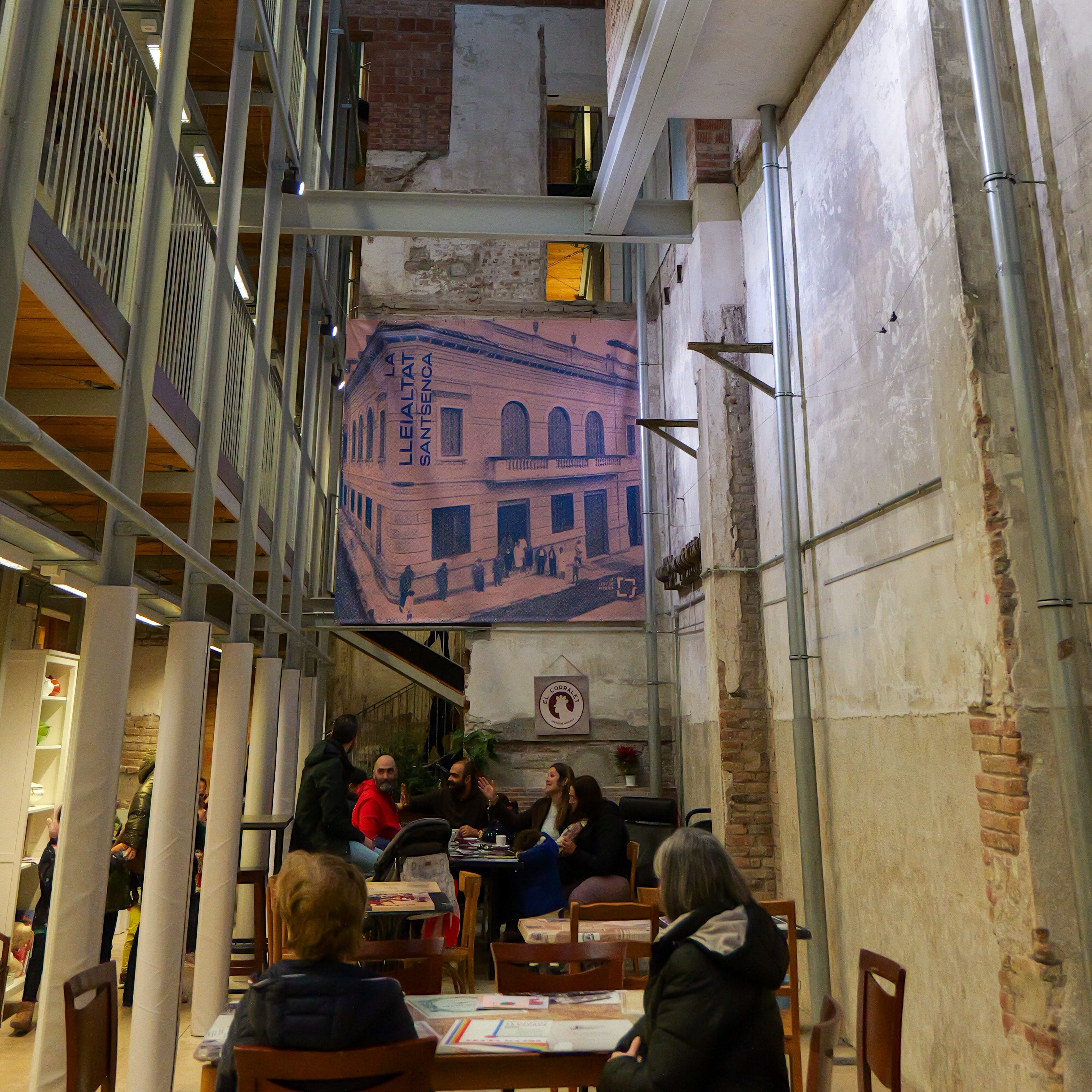
These spaces feel porous rather than programmed. People drift in and out across generations and backgrounds. Cultural activity sits alongside political meetings, language classes, food projects and informal social life. Governance is visible and participatory, embedded in assemblies and working groups rather than hidden behind institutional hierarchies. What emerges is not just access to space, but a sense of collective authorship over the neighbourhood itself, a feeling that the city is something residents actively shape rather than consume.
This culture of collective organising is inseparable from Barcelona’s political history. Decades of repression under the Franco regime cultivated strong traditions of anti-fascist resistance, mutual aid, labour organising and ongoing struggles for regional autonomy and self-determination. Catalan identity, shaped through resistance, language preservation and self-governance, continues to provide a strong collective frame for civic participation. Municipal power, cultural survival and land are always entangled.
Sants itself carries a history that resonates with many post-industrial neighbourhoods in the UK. Its development was shaped by textile production, migrant labour, union organising and dense working-class social life. In British cities, similar industrial histories exist: alongside waves of migration from South Asia, the Caribbean and elsewhere that sustained manufacturing economies and reshaped urban culture. Yet while Barcelona retained and renewed many of its collective institutions, much of the UK’s industrial civic infrastructure was dismantled through privatisation, deindustrialisation and the long retreat of municipal power. Former factories and warehouses that might have become social infrastructure were more often absorbed into speculative property markets, fragmenting the conditions for collective life.
What distinguishes Barcelona is not only the presence of community spaces, but the wider urban commons movement that connects them into a coherent political ecology. Grassroots organising has influenced municipal policy, land use, housing strategies and cultural governance, creating feedback loops between neighbourhood experimentation and city-level decision-making. Community ownership, long-term stewardship and participatory governance are treated not as marginal alternatives, but as legitimate urban infrastructure. Cultural production is embedded within this ecosystem rather than separated into elite institutions or commercial districts.
Spending time within these spaces makes tangible what becomes possible when land, culture and governance align. Collective kitchens become sites of political education. Workshops become spaces for skill-sharing and mutual support. Performances and exhibitions sit alongside assemblies and neighbourhood campaigns. Culture is not something consumed after work; it is part of how people organise everyday life and sustain collective imagination.
This raises difficult questions for the UK context. What kinds of political memory, institutional continuity and land governance would be needed to cultivate similar cultures of municipal organising? How might histories of migration, racialisation and class struggle shape a different but equally powerful model of collective civic life? If Barcelona demonstrates the capacity for neighbourhood-scale organising to reshape city cultures over time, the challenge is not replication, but translation: understanding how these principles might take root within the UK’s specific social, political and racial landscapes.
Relational Infrastructure, Land and the Conditions for Collective Power
What sustains neighbourhood organising over time is not just funding or buildings, but relational infrastructure: the slow accumulation of trust, shared language, conflict resolution, care practices and collective confidence that allows people to act together in moments of pressure and possibility. This kind of infrastructure is largely invisible to conventional policy metrics, yet it is what turns cultural activity into civic capacity.
Third spaces play a crucial role in making relational infrastructure tangible. Workshops, social centres, studios, kitchens and gardens become sites where cultural practice, everyday governance and mutual care overlap. They enable people to encounter one another outside transactional settings, to rehearse disagreement, to share skills, to build safety through presence rather than surveillance. For global majority communities in particular, these spaces offer not only cultural affirmation but collective protection in a political climate increasingly shaped by racialised hostility and exclusion.
Without long-term access to decommodified space, relational infrastructure struggles to consolidate. Short leases and unstable funding repeatedly interrupt organising cultures, forcing communities to rebuild relationships and governance structures from scratch. Creative municipalism therefore demands a shift in how land and buildings are governed: toward community stewardship, cooperative ownership, long-term municipal leasing and land trusts that prioritise social use over asset appreciation. Land becomes cultural infrastructure: a commons that holds memory, practice and political capacity.
The politics of land governance are not abstract. In Barcelona, the history of Can Batlló reveals how authoritarian power translated directly into illicit wealth accumulation and the enclosure of working-class space. In 1943 the site was purchased by Julio Muñoz Ramonet, a businessman who rose rapidly by aligning himself with Franco’s military dictatorship, securing monopolies over cotton imports and leveraging political favour to acquire dozens of factories. His fortune was built through regulatory capture, market manipulation and proximity to authoritarian and fascist power rather than innovation. Despite later fleeing to Switzerland amid tax evasion charges, his family retained ownership of Can Batlló for decades, keeping the site locked from public use. The recovery of the building as a community-managed space was therefore not simply regeneration, but a form of historical repair, reclaiming land extracted through authoritarian networks back into collective stewardship. It offers a concrete reminder that far-right politics, wealth accumulation, land extraction and the disappearance of third spaces are deeply interconnected, and that rebuilding commons is inseparable from confronting these political economies.
This is also a decolonial question. Land privatisation, displacement and extractive urban development in the UK are inseparable from colonial accumulation and racialised property regimes. Reclaiming collective governance over space is not simply about efficiency or resilience, but about repairing historical dispossession and reasserting the right to shape the conditions of everyday life. For global majority communities, municipal organising becomes a way of transforming inherited precarity into shared agency.
Cultural policy must follow this shift. Rather than privileging centralised institutions, policy can support neighbourhood ecologies: long-term revenue for community governance, maintenance of shared spaces, skills transmission, and locally embedded cultural economies. This requires valuing cultural work that happens in kitchens, studios, workshops, streets and community halls as much as in theatres and galleries, recognising culture as a living social infrastructure rather than a sector.
At its deepest level, creative municipalism reconnects culture with the work of sustaining life itself: housing, food, care, climate resilience, safety and belonging. It offers a pathway toward new civic identities grounded not in nostalgia or exclusion, but in shared stewardship, interdependence and collective imagination.
Toward a Decolonial, Collective Culture of Transition
Decentralising power and decommodifying culture in the UK is not simply a governance reform or a funding adjustment. It is a deeply decolonial project. Many of the institutions that dominate the cultural landscape today, from major landholders to national arts bodies, were built through colonial extraction, enclosure and the concentration of wealth. Their authority over cultural value, legitimacy and resources continues to reproduce hierarchies of voice, access and visibility. Shifting power away from these centres and toward neighbourhood-based, collectively governed infrastructures is not about dismantling culture, but about widening who gets to shape it.
This matters because culture does more than represent who we are: it actively shapes what we believe is possible. Film, literature, music, visual art and storytelling form the emotional and imaginative infrastructure of society. They influence how we relate to one another, how we understand care, risk, responsibility and belonging, and how we make sense of crisis and change. When cultural production is concentrated within exlusionary institutional pipelines, the futures we are offered also narrow. When cultural life is rooted in shared spaces and collective practice, imagination becomes plural, grounded and accountable to lived realities.
A ‘well-being economy’ depends on this cultural dimension as much as it depends on material provision. Affordable housing, access to healthy food, green space, healthcare and safety are inseparable from the conditions that allow people to feel connected, expressive and capable of shaping their lives. Cultural participation strengthens agency, confidence and relational capacity - the foundations of meaningful choice. Creativity is not a luxury layered onto stability; it is part of how stability is made.
For global majority communities, this carries particular weight. Cultural practice has long functioned as a site of survival, transmission, care and political imagination in the face of displacement and exclusion. Opening up pathways for collective ownership, neighbourhood governance and locally rooted cultural economies creates space not only for representation but for leadership in shaping social and ecological transitions. Migrant and diasporic knowledges about land stewardship, mutual aid, informal economies, repair, and interdependence offer vital resources for navigating climate breakdown and economic uncertainty.
New civic cultures can emerge through practice: through community gardens that become sites of shared learning and care; through studios that double as organising spaces; through kitchens, workshops and assemblies where relationships deepen and political confidence grows. These spaces allow values such as collective responsibility, ecological stewardship and solidarity to move from abstract commitments into everyday habits. They also create the conditions for resisting authoritarian narratives that thrive on isolation, fear and scarcity.
“Everyone I know longs for healing. It’s just hard to get. The good kind of healing: healing that is affordable, has childcare and no stairs, doesn’t misgender us or disrespect our disabilities or sex work, believes us when we’re hurt and listens when we say what we need, understands that we are the first and last authority on our own bodies and minds.”
Leah Lakshmi Piepzna-Samarasinha, Care Work: Dreaming Disability Justice
Creative municipalism, in this sense, is not only about cities or policy. It is about rebuilding the social and cultural foundations that make democracy durable and futures imaginable. It asks what it would mean to treat culture as shared infrastructure rather than commodity, land as commons rather than asset, and neighbourhoods as sites of collective authorship rather than extraction. The work is slow, relational and unfinished, but it is already underway in the cracks of the present and the glimpses of the future.
My Fellowship and art practice continue these enquiries, and I’ll be carrying these questions with me as I move through Kuching over the next two weeks, listening and tracing how culture becomes a commons in practice.
Brilliantly written Tay, and such a thought-provoking read. Lots to absorb and consider. Sounds like the fellowship is giving you the time and space to bring your insights to the world. We need more of this 👏
A Bristol person on Substack! Hooray! (Hello from Stapleton)